

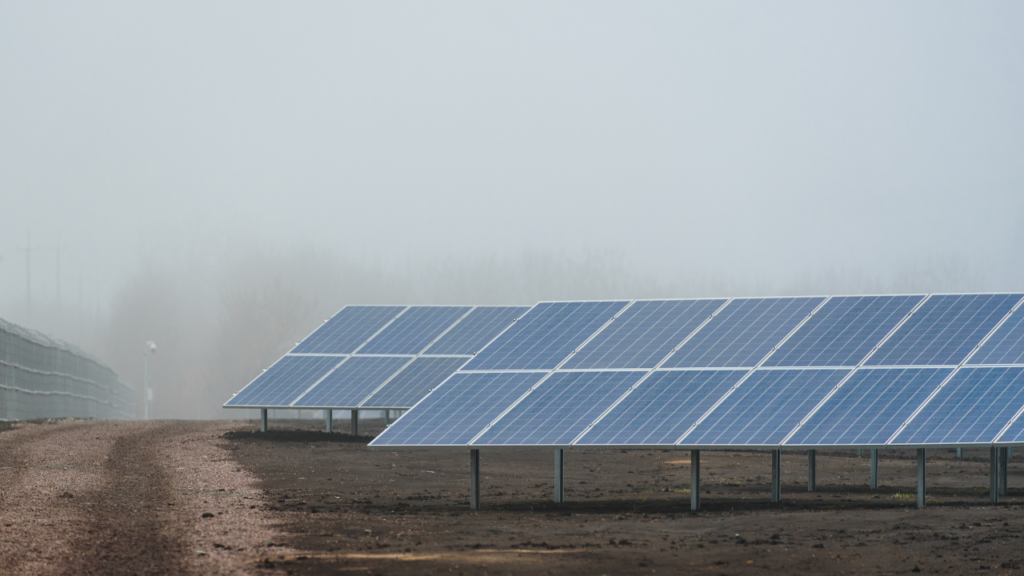
Gem City Solar Changes Hands as Massive Adams County Project Moves Toward Construction
QUINCY, Ill. One of the largest energy developments ever proposed in Adams County has a new owner as the massive Gem City Solar project south of Quincy Regional Airport moves closer to construction.
Sunraycer Renewables announced Nov. 3 that it has acquired Gem City Solar from Apricus Energy, the joint venture between NOVI Energy and Osaka Gas USA that spent several years developing and permitting the project.
The acquisition means Sunraycer, an Annapolis, Maryland-based independent power producer, will take control of the 175-megawatt solar development planned for Adams County. The company also acquired the 150-megawatt Mighty Mississippi Solar project in New Madrid County, Missouri, as part of the same transaction. Together, the two projects total 325 megawatts.
The project is planned across approximately 1,190 acres of primarily agricultural property south of Quincy Regional Airport in Burton Township. County documents show the development encompasses 24 parcels and is designed to connect directly to Ameren’s existing 138-kilovolt transmission system.
To put its physical size into perspective, 1,190 acres is roughly equivalent to about 900 football fields.
And unlike the smaller solar developments that have become increasingly common around Adams County, Gem City is being designed as a utility-scale power plant.
At 175 megawatts of alternating-current generating capacity, Gem City alone accounts for more than half of the generating capacity included in Sunraycer’s newly acquired two-project portfolio.
Sunraycer said the combined Gem City and Mighty Mississippi projects are expected to eventually generate enough electricity to serve approximately 78,500 homes. The company did not provide a separate household-equivalent estimate for the Gem City project alone.
The development has also moved substantially beyond the conceptual stage.
Sunraycer said site control has been secured, environmental studies have been completed and key permitting work is substantially complete. Both projects are now in the final phase of the Midcontinent Independent System Operator, or MISO, interconnection process, which governs how new generating facilities connect to the regional electric grid.
The Adams County Board previously approved the special-use permit needed for Gem City Solar.
The timetable, however, has changed since the project was originally presented locally.
Earlier development documents anticipated construction beginning much sooner, with operations potentially starting in late 2027 or early 2028. Sunraycer’s new announcement now calls for construction to begin in early 2028, with commercial operation targeted for 2029.
That makes the acquisition especially noteworthy. Sunraycer is not simply purchasing undeveloped farmland and starting from scratch. It is acquiring a project that has already gone through years of site acquisition, environmental review, local permitting and electric-grid planning.
Sunraycer also operates under a different business model than a developer that prepares projects for eventual sale.
The company describes itself as a fully integrated independent power producer that develops, builds, owns and operates large-scale energy projects. Sunraycer says it currently has 1.3 gigawatts of solar and battery-storage capacity operating or under construction and another 1.5 gigawatts in development. Its portfolio now lists Gem City as a 175-megawatt development with a targeted 2029 commercial operation date.
That long-term ownership model could make Sunraycer a significant corporate presence in Adams County for decades if Gem City reaches construction and operation.
The economic impact could also be substantial.
When Apricus submitted its special-use permit application to Adams County, it estimated that hundreds of workers would be needed during an approximately 18-month construction period. The developer said it intended to use local labor and local businesses where possible, potentially creating additional spending at area hotels, restaurants, stores and service companies.
Sunraycer now estimates its two newly acquired projects together will support approximately 560 construction jobs.
More significant for Adams County over the long term could be the property-tax revenue generated after Gem City begins operating.
The original Gem City application estimated that the project could produce more than $1 million in real estate property taxes in its first assessed year under the assumptions used at the time. Those taxes were expected to benefit several taxing bodies, including Adams County, Burton Township, the village of Liberty, John Wood Community College and the Liberty and Payson school districts.
That $1 million figure should not be viewed as a guaranteed current tax bill. The calculation was prepared using the project’s earlier construction schedule, state solar valuation requirements and tax rates available at that time. With commercial operation now pushed to 2029, the eventual assessment and tax distribution could change.
Still, the estimate illustrates how dramatically the property’s contribution to the local tax base could change when agricultural acreage becomes a large commercial generating facility.
Sunraycer said the Gem City and Mighty Mississippi projects combined are expected to contribute approximately $92 million in local tax revenue over their operating lives. The company did not break down how much of that total would come specifically from Gem City or how much would ultimately flow to individual Adams County taxing districts.
Participating property owners would also receive long-term lease payments while retaining ownership of their land, according to the original county application. The project documents state that the property is intended to be restored to usable agricultural condition after the solar facility reaches the end of its operating life.
The sheer amount of infrastructure planned for the site further demonstrates the project’s scale.
Earlier engineering documents called for 43 inverter and transformer skids, miles of internal electrical infrastructure and roads, a project substation and a separate Ameren switching station connecting Gem City to the East Quincy-Fishhook 138-kilovolt transmission line.
Sunraycer CEO David Lillefloren called Gem City and Mighty Mississippi significant additions to the company’s growing portfolio, saying the projects expand Sunraycer’s geographic reach and position the company to help meet increasing electricity demand across the Midwest.
For Quincy and Adams County, the transaction provides a clearer picture of what happens next with a project that, because of its location away from the city’s major commercial corridors, could easily escape public attention despite its enormous footprint.
Gem City Solar would cover nearly 1,200 acres, produce up to 175 megawatts of electricity, create a major new taxable energy asset and place one of Sunraycer’s largest Midwestern solar developments just south of Quincy Regional Airport.
Construction is not expected to begin until early 2028.
But with a new owner, local permits already secured and the project moving through the final stages of the regional grid-interconnection process, Gem City Solar is increasingly moving from a proposal on paper toward one of the largest physical developments in Adams County.