
Quincy University to Host Holocaust Exhibition
Quincy University to Host Holocaust Exhibition Exploring How Americans Responded as Atrocities Unfolded
QUINCY, Ill. A nationally recognized exhibition examining what Americans knew about the Holocaust, when they knew it and how they responded will arrive in Quincy later this month.
“Americans and the Holocaust” will open Oct. 29 at Quincy University’s Brenner Library and remain on display through Dec. 4, 2026.
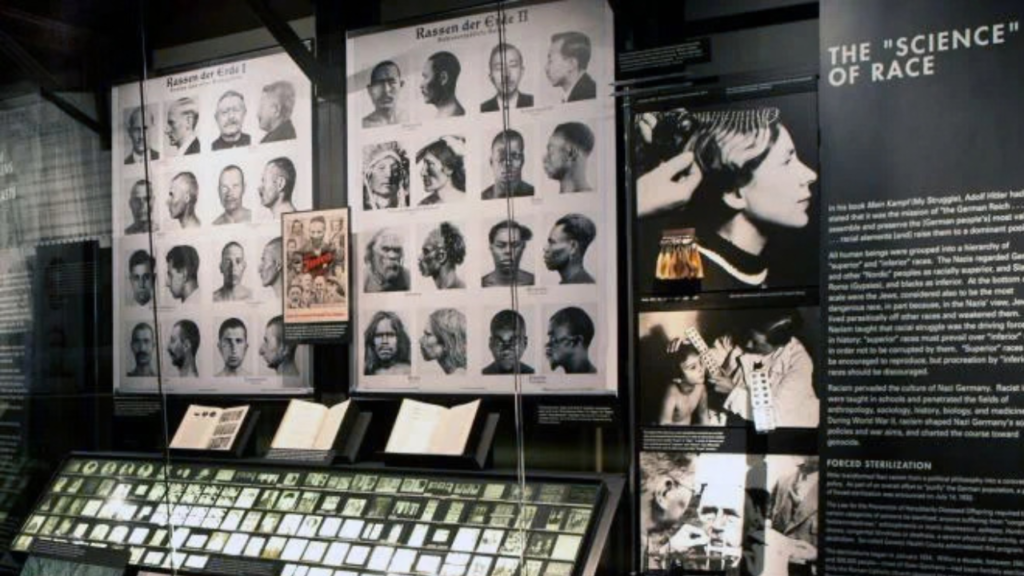
Created by the United States Holocaust Memorial Museum and the American Library Association, the 1,100-square-foot traveling exhibition explores Holocaust-related themes through the experiences and perspectives of Americans living during the 1930s and 1940s.
Rather than examining the Holocaust only from Europe, the exhibition asks visitors to consider events from the American side of the Atlantic.
Its stories include Olympic athletes, government officials, Hollywood producers and Americans with relatives living in Germany and areas controlled by Nazi Germany.
For Brenner Library Dean Katie Kraushaar, the exhibition is an opportunity to bring history into the present.
“Brenner Library is honored to share the ‘Americans and the Holocaust’ exhibition with the Quincy region,” Kraushaar said. “Lectures, films and interactive presentations are planned to supplement the lessons of the exhibit.”
The exhibition explores how Americans first learned about the persecution and murder taking place overseas and how individuals, institutions and government officials reacted as events unfolded.
Kraushaar said the questions raised by that history remain relevant generations later.
“Through our programming, we are continuing that conversation: what would we have done? How will we remember? How do we ensure these actions do not happen again?” Kraushaar said.
A national story with Quincy connections
Brenner Library also plans to use the exhibition as an opportunity to explore the Quincy area’s connections to World War II.
“There are well-known local connections to World War II in this area, from the soldiers and pilots who went to fight, to radios built here to support the D-Day invasion, to Paul Tibbets and the Enola Gay,” Kraushaar said.
Those connections will help place the national exhibition within a local historical context, connecting events that happened thousands of miles away with people, industries and families from the Quincy region.
The exhibition will officially open with a keynote presentation at 6 p.m. Oct. 29 featuring Daniel Greene, Ph.D., the exhibition’s curator and an adjunct professor of history at Northwestern University.
Greene will discuss conditions inside the United States that influenced the nation’s response to events unfolding in Europe, including the Great Depression, isolationism and antisemitism.
Greene curated “Americans and the Holocaust” when it opened at the United States Holocaust Memorial Museum in Washington in 2018 as part of the museum’s 25th anniversary.
The exhibition later helped inspire “The U.S. and the Holocaust,” the documentary directed by Ken Burns, Lynn Novick and Sarah Botstein that aired on PBS in September 2022. Greene served as an adviser to the film.
From 2019 through 2023, Greene served as president and librarian of the Newberry Library in Chicago.
Community effort brings exhibit to Quincy
Bringing the exhibition to Quincy was the result of a collaboration involving Brenner Library, the Quincy University Advancement Department and university faculty.
Kraushaar also credited several local organizations for assisting with the effort, including Quincy Public Schools, Quincy Notre Dame, the Illinois Veterans Home of Quincy, the Historical Society of Quincy and Adams County and Quincy University’s POLIS program.
The exhibition will be accompanied by lectures, films and interactive programming intended to expand upon the historical material presented throughout the display.
Educational resources and opportunities for group tours will also be available through Quincy University.
For visitors, the exhibition presents more than a chronology of events.
It asks them to consider how ordinary people responded as information emerged about persecution abroad, what forces shaped public opinion and government policy, and how Americans today understand those decisions more than eight decades later.
For several weeks this fall, those questions will be posed inside Brenner Library in Quincy.
“Americans and the Holocaust” opens Oct. 29 and continues through Dec. 4.