

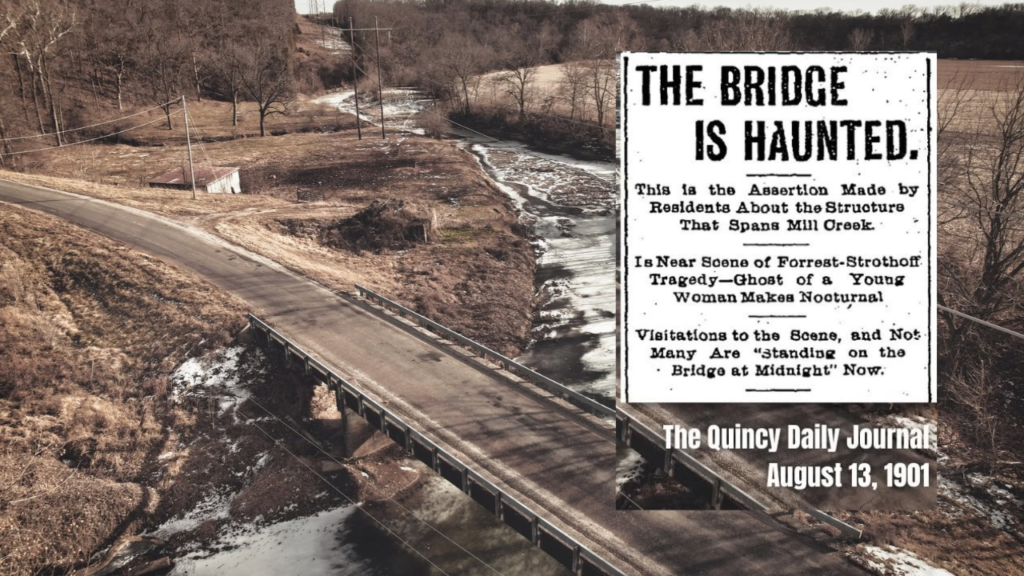
Quincy’s Most Haunted: The Tragic Lovers and the Haunted Bridge East of Quincy
More than a century ago, the mysterious deaths of two young lovers near Mill Creek gave rise to chilling accounts of ghostly apparitions, unexplained screams and a country road reportedly avoided after dark.
QUINCY, Ill. — Along a quiet country road east of Quincy, where wooded hillsides descend toward the waters of Mill Creek, an ordinary-looking bridge became the setting for one of the area’s most unsettling ghost stories.
The legend began in the summer of 1901, when two young people left a farmhouse to gather flowers and never returned. Their deaths would leave a community searching for answers and, in the months that followed, give rise to stories of an apparition wandering near a lonely bridge and the haunting cries of a woman echoing through the surrounding woods.
More than 125 years later, the story of Louisa Strothoff and Frank Forrest remains a chilling intersection of local history, unexplained tragedy and supernatural folklore.
A Summer Romance Ends in Tragedy
Louisa Strothoff was the daughter of Bernard Strothoff, a prominent farmer in Ellington Township, east of Quincy. Frank Forrest was a young man who had recently begun working as a molder in Quincy.
Both were reportedly well-known and well-liked in the community.
The two had developed a romantic relationship, although accounts from acquaintances suggested there may have been difficulties between them in the days leading up to their deaths.
On the day of the tragedy, Forrest had been invited to visit Louisa at her family’s farmhouse along what is now known as St. Ludgerus Road, several miles east of Quincy.
During the visit, someone remarked on the beautiful lilies arranged on a table inside the home. Louisa suggested that she and Frank take a walk toward a nearby field along Mill Creek to gather additional flowers.
It was a seemingly innocent suggestion on an otherwise ordinary summer day.
The couple departed the farmhouse together.
Neither would ever return alive.
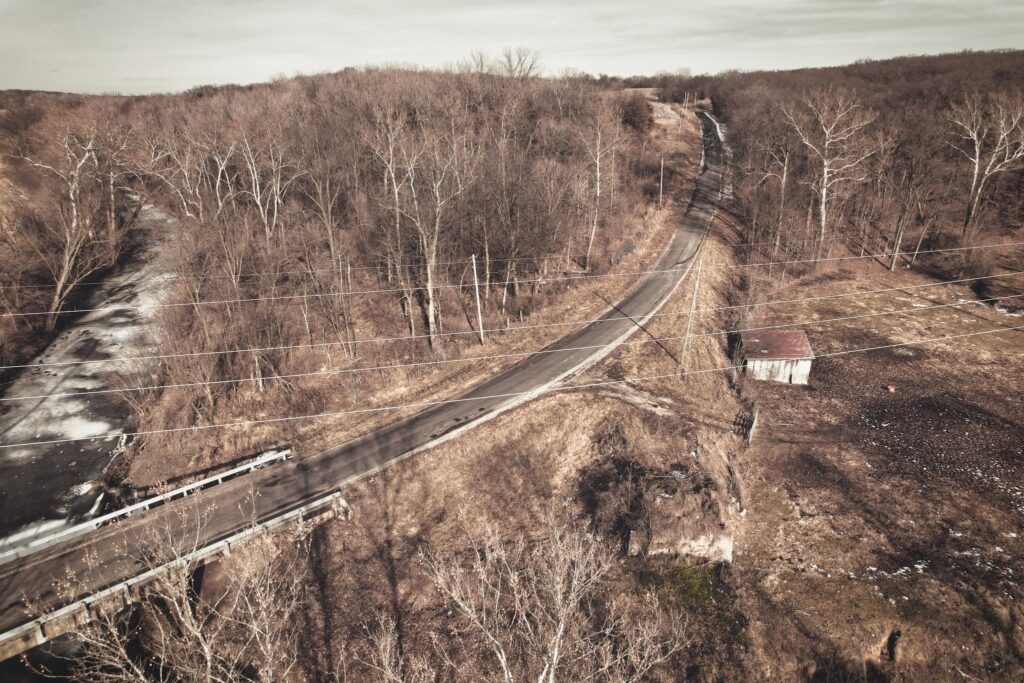
A Grim Discovery Near Mill Creek
As the afternoon passed into evening and the couple failed to return, their families became increasingly concerned.
A search party was organized, led by Louisa’s brother, Steve Strothoff. Friends and family began searching the surrounding fields, hillsides and wooded countryside.
Around daybreak, their search came to a devastating conclusion.
The bodies of Louisa and Frank were discovered lying on a hillside not far from Mill Creek.
Both had suffered gunshot wounds. A firearm was found near the bodies.
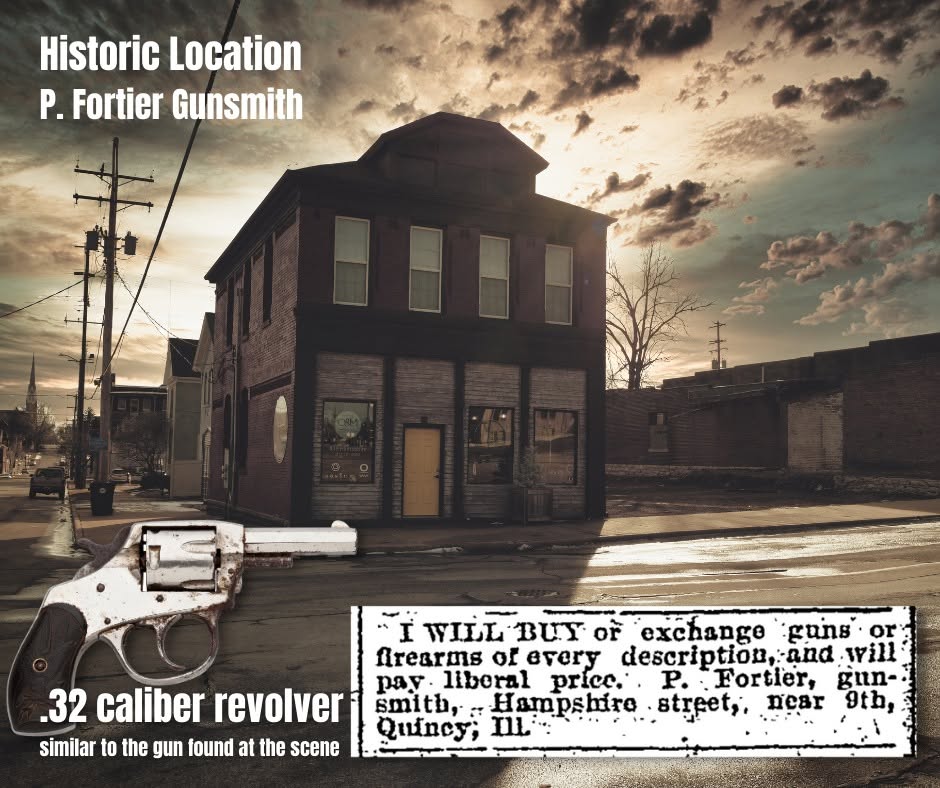
What initially appeared to be a tragic end to a young romance soon became the subject of considerable speculation and unanswered questions.
Neither family reportedly recognized the weapon recovered at the scene. Relatives maintained that neither Louisa nor Frank owned a firearm.
Later accounts suggested that Louisa may have purchased the gun from a shop in Quincy, although questions remained about the circumstances surrounding its acquisition.
Adding to the mystery was a letter Louisa had reportedly left behind.
Despite a lengthy inquest into the deaths, the precise sequence of events and circumstances surrounding the tragedy were never conclusively established.
For the families, the loss was immeasurable. For the surrounding community, the mystery would linger.
But the story was far from over.
A Road Shunned After Dark
Within months of the couple’s deaths, unusual stories began circulating among residents living near Mill Creek.
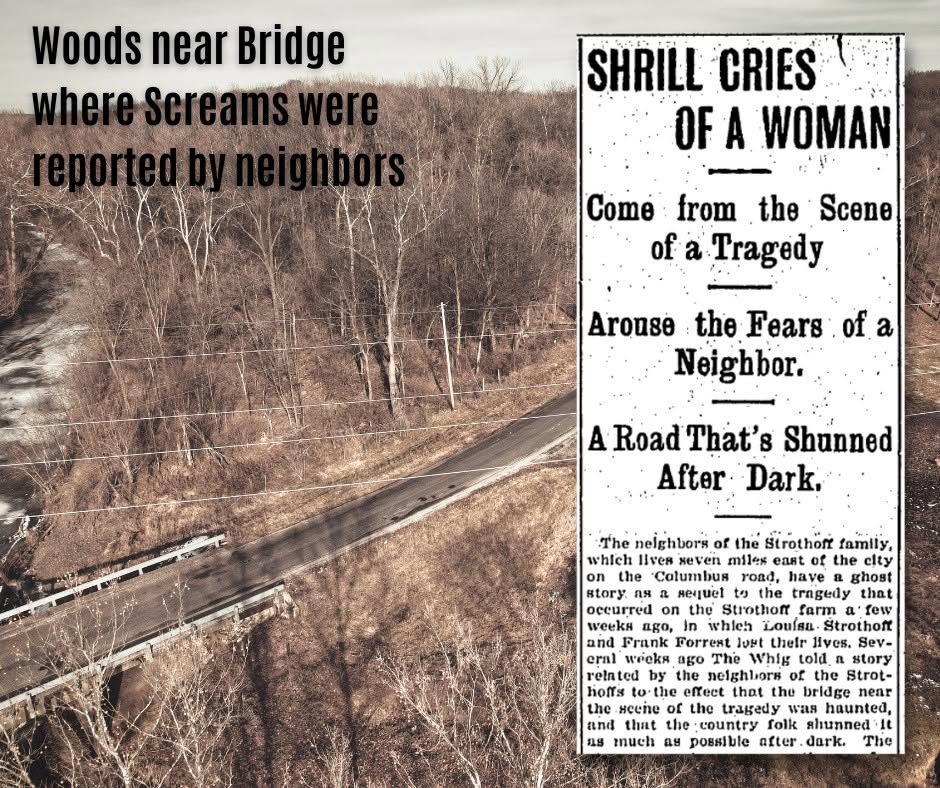
People traveling the country roads through the wooded countryside reported strange encounters near the bridge and the surrounding timber.
Some claimed to have witnessed a mysterious apparition appearing near the bridge.
Others spoke of hearing the shrill cries of a woman coming from somewhere deep within the woods.
The reports were unsettling enough to attract the attention of the local press.
The Quincy Daily Whig published an account under the ominous headline, “A Road That’s Shunned After Dark.”
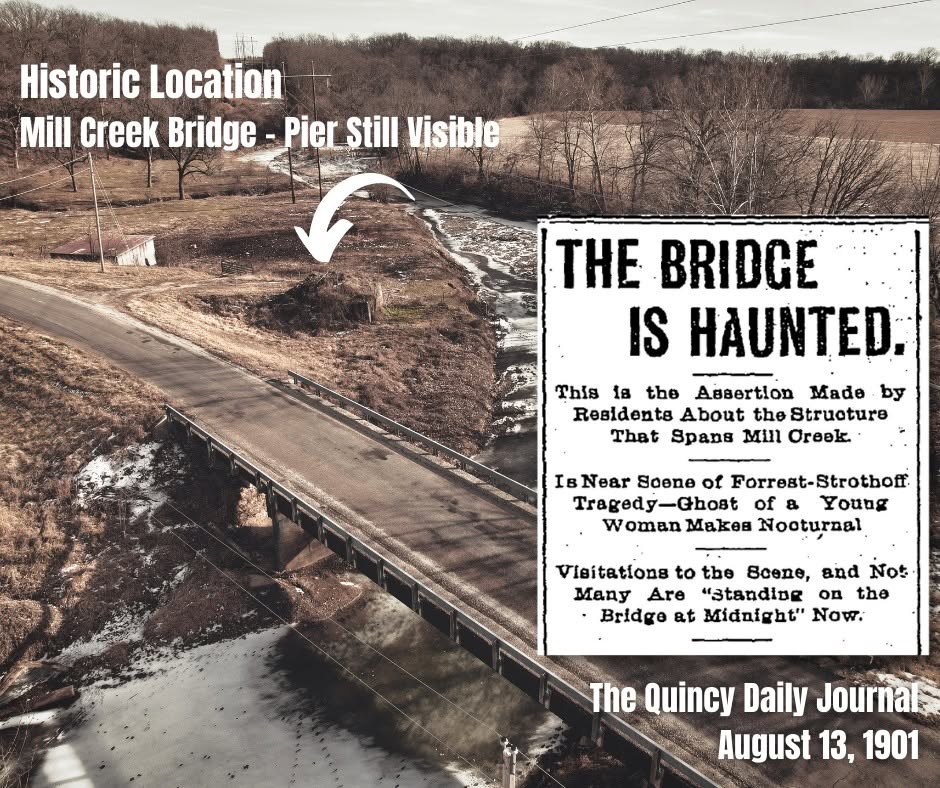
The newspaper described the growing supernatural reputation of the area, where accounts of ghostly activity had apparently made some residents reluctant to travel after nightfall.
One contemporary observer even suggested the location would be an ideal place “for those who believe in spiritualistic phenomena to carry on an investigation.”
Whether these experiences represented something genuinely unexplained or reflected a community still shaken by the violent deaths of two familiar young people remains unknown.
Nevertheless, a local legend had been born.
The Woman in the Woods
Imagine the countryside east of Quincy at the beginning of the 20th century.
There were no electric streetlights illuminating the remote roads. The surrounding woods could become almost completely dark after sunset, with little more than moonlight filtering through the trees.
A traveler approaching Mill Creek might hear only the sounds of insects, the rustling of leaves or the steady movement of water beneath a bridge.
Then, according to the stories, something else might break the silence.
A woman’s piercing cry.
Those who believed the accounts wondered whether the apparition and unexplained screams were connected to the deaths of Louisa Strothoff and Frank Forrest.
Had the tragedy somehow left a lasting presence in the woods?
Was the spirit of one of the young lovers doomed to wander the place where their lives had ended?
Or were the reported encounters simply products of fear, grief and the powerful influence of local storytelling?
No historical evidence establishes that the reported supernatural encounters had a paranormal origin. Yet the accounts themselves offer a fascinating glimpse into how communities of an earlier era understood death, tragedy and the unknown.
Where History Becomes Legend
More than a century has passed since the deaths of Louisa Strothoff and Frank Forrest.
The countryside east of Quincy has changed. Generations have come and gone, and modern roads have replaced many of the lonely rural routes traveled by residents in 1901.
But the story remains a haunting reminder of the region’s forgotten history.
At its heart is a genuine human tragedy involving two young lives cut short under circumstances that left lingering questions.
Surrounding that tragedy is a layer of folklore, preserved in historical newspaper accounts, that transformed a rural bridge and its neighboring woods into a place associated with mysterious apparitions and cries in the darkness.
Perhaps the most unsettling aspect of the legend is not whether something supernatural ever appeared at Mill Creek.
It is the realization that, for those who lived near the bridge in 1901, the fear was real enough to give a familiar country road an ominous reputation.
And sometimes, the stories a community tells about a place endure long after the people who first told them are gone.
Some places are haunted by ghosts. Others are haunted by history. Along Mill Creek, the legend suggests there may be a little of both.
Coming Next: Quincy’s Most Haunted, Part 2
The ghost stories associated with Mill Creek did not end with the bridge and surrounding woods.
In the next installment of Quincy’s Most Haunted, Quincy Current explores a nearby home with ties to the tragedy and its own unsettling reputation.
Would you travel the old Mill Creek road after dark?
Quincy’s Most Haunted is a special Halloween series from Quincy Current exploring the documented tragedies, historical mysteries and supernatural folklore associated with Quincy and the surrounding area. Accounts of hauntings are presented as local legends and historical reports, not verified paranormal phenomena.