175 Years of Faith: St. James Lutheran Celebrates a Remarkable Quincy Milestone
St. James Lutheran Church Celebrates 175 Years of Faith, Education and Quincy History
From a church built by its own members in 1851 to a congregation that later hosted Quincy’s first live televised church service, St. James Lutheran Church is marking a milestone few local institutions can claim.
QUINCY, Ill. For 175 years, the story of St. James Lutheran Church has been intertwined with the story of Quincy itself.
The congregation began in 1851, when Quincy was still a relatively young Mississippi River community filled with immigrants building churches, businesses, schools and neighborhoods that would shape the city for generations.
This year, St. James is celebrating its 175th anniversary, honoring a history that includes German-language worship, a church bell that has sounded for more than a century and a half, one of Quincy’s oldest parochial schools, a direct connection to Venerable Augustus Tolton and generations of families who have continued the congregation’s mission.
Quincy Current recently spoke with Bob Hagemann, a volunteer church historian and archivist who has spent considerable time preserving and studying the history of St. James.
For Hagemann, the anniversary is more than simply a date on a calendar.
It is an opportunity to look back at how much has changed while recognizing the central beliefs that, in the congregation’s view, have remained constant since 1851.
A church built by its members
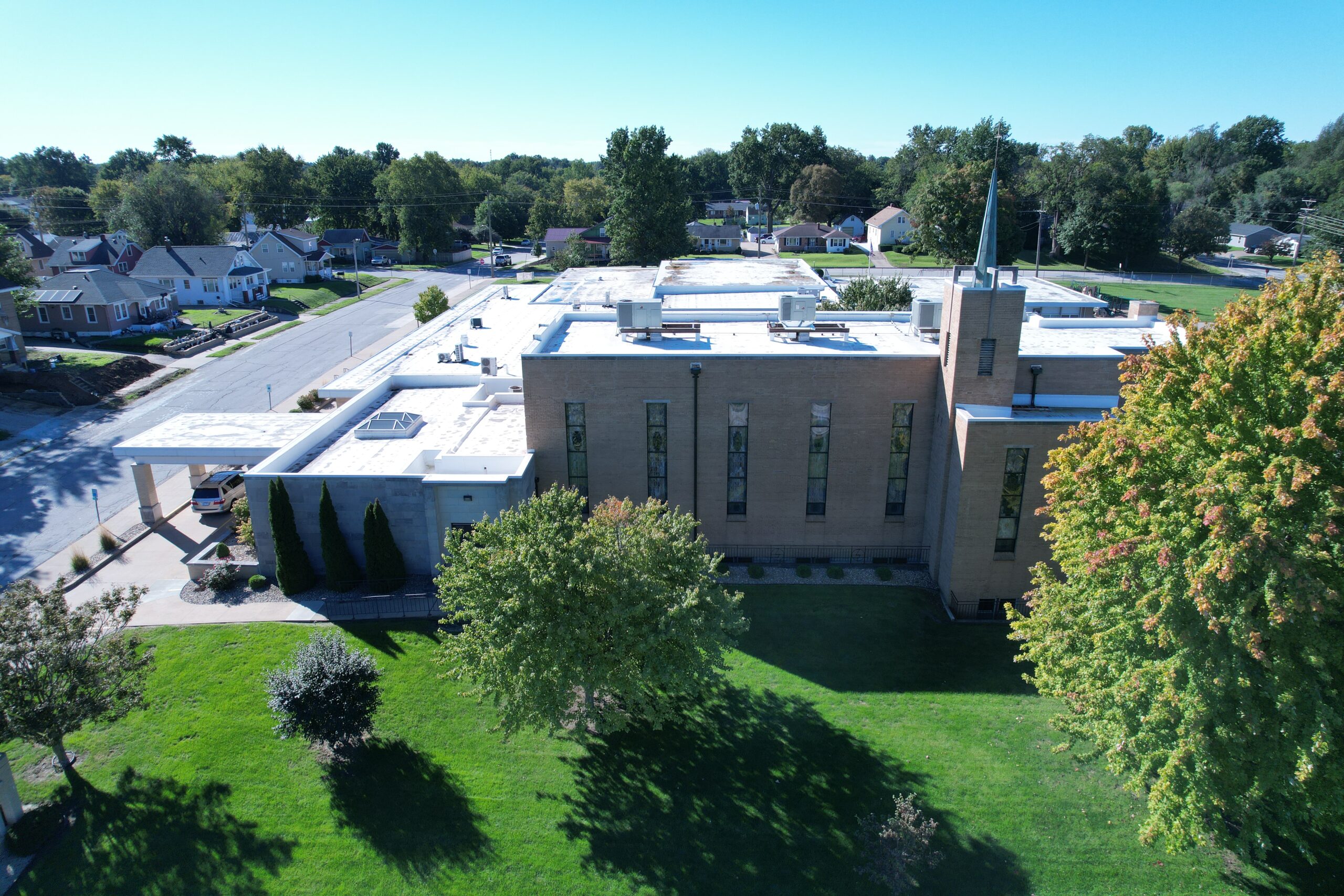
The first St. James Lutheran Church stood at Seventh and Jersey streets. According to Hagemann, members of the congregation themselves began construction on the church in 1851, completing the building the following year.
That first church would become the center of a growing German Lutheran congregation in Quincy. For more than half a century, the language heard inside St. James reflected the immigrant community that established it.
Hagemann said all church services and classroom instruction were conducted in German from 1851 until 1908. That period represents one of the clearest examples of how Quincy’s immigrant communities preserved their language, faith and traditions while building permanent institutions in their new home.
Eventually, English replaced German in worship and education, but the congregation itself continued.
A bell that has rung for 160 years
One of the most remarkable physical links between the earliest days of St. James and the church of today still rings. The congregation’s original church bell was installed in 1851.
Hagemann said the bell was reforged in 1865 and has now been in continuous use for approximately 160 years. Rather than being abandoned as the congregation moved into new buildings, the bell traveled with St. James.
It was moved from the first church to the congregation’s second church and eventually to the current church, allowing generations of Quincy residents to hear essentially the same bell that called worshippers together during the Civil War era. Few objects in Quincy can claim such a long period of continuous use.
A remarkable connection to Father Tolton
The history of the first St. James building also intersects with another major chapter of Quincy history. When St. James completed its new church at Eighth and Washington streets, the original building at Seventh and Jersey was sold to the Catholic Diocese.
According to Hagemann, that former Lutheran church became associated with the early ministry of Father Augustus Tolton after his ordination.
Tolton, who grew up and was educated in Quincy after escaping slavery with his family, became the first publicly recognized Black Catholic priest in the United States.
His return to Quincy as an ordained priest made the former St. James building part of the history of two important religious traditions in the city.
It is one of those small intersections of local history that demonstrates how buildings can continue serving a community long after their original congregations move elsewhere.
Education almost from the beginning
St. James did not wait long to make education part of its mission.
The congregation established its day school in September 1851, only about a month after the church itself was organized.
According to Hagemann, St. James Lutheran School has continued providing Christian education ever since and is the oldest operating parochial school in Quincy.
That means generations of local children have passed through St. James classrooms during a period spanning the Civil War, two world wars, the Great Depression, the arrival of automobiles, radio, television, computers and the internet.
The school’s methods, curriculum and facilities have evolved considerably during that time, but its connection to the congregation has remained. The church has also produced its own future clergy.
Hagemann said 14 sons of the congregation have entered the pastoral ministry since 1895.
The current church was paid off in one year
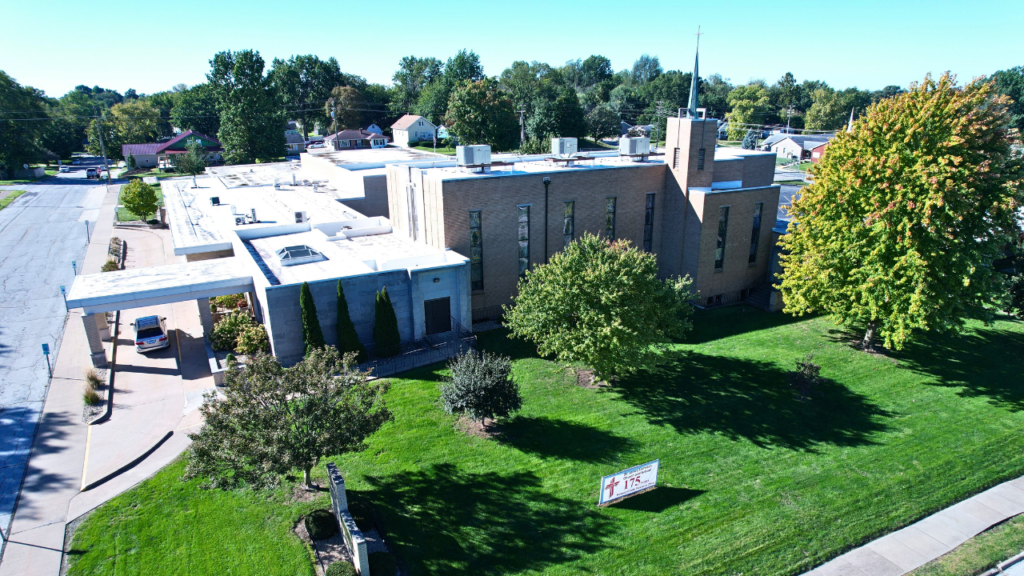
Another milestone Hagemann points to is the construction of the congregation’s current church. After the building was completed, the congregation had it fully paid for within one year.
That accomplishment stands as a reflection of the financial commitment made by the members who built the church for future generations. The sanctuary itself has continued to evolve.
St. James completed a major renovation of the sanctuary this year at a cost of approximately $700,000, giving the historic congregation a renewed worship space during its anniversary year.
A historic organ restored
Music has also played a major role in the life of St. James. The church’s current organ was installed in 1952 at a cost of approximately $14,000. More than seven decades later, that instrument remains an important feature of the sanctuary.
Hagemann said the organ was refurbished during the anniversary year and is now valued at approximately $690,000. The restoration represents another example of the congregation preserving something from its past while preparing it for future generations.
Quincy’s first live televised church service
St. James also played a role in Quincy broadcasting history.
On Easter Sunday in 1956, the congregation hosted what Hagemann identifies as the first live televised church service in Quincy.
At a time when television itself was still relatively new in many American homes, the service allowed people beyond the sanctuary walls to experience worship from St. James.
Seventy years later, the congregation continues to use changing technology to carry its message beyond the church building. St. James now broadcasts services each week through radio and the internet.
Serving beyond the church walls
The congregation’s history is not limited to worship services and school classrooms. From 2017 through 2024, St. James participated in efforts supporting the Neighborhood Federation near Eighth and Payson.
That work reflects a broader part of the congregation’s mission, according to Hagemann, which has included involvement in the surrounding community in addition to its traditional church ministries.
The neighborhoods around St. James have changed dramatically since the congregation’s earliest years. The church has changed with them in many practical ways.
But Hagemann said its theological identity has remained consistent.
“Grace alone, faith alone, Scripture alone”
When asked how St. James has changed over the generations while maintaining its Lutheran identity, Hagemann pointed to a foundational teaching of the Lutheran Reformation.
While daily practices have changed, he said the congregation continues to teach that a person is saved “by Grace alone, Faith alone, Scripture alone,” reflecting the principles associated with Martin Luther and the Protestant Reformation. For Hagemann, that continuity is at the heart of the anniversary.
“To me, the anniversary solidifies my life-long reassurance that my faith in Jesus Christ is the one and only true means of salvation, and that at St. James church His Word is always taught in its truth and purity since 1851,” he told Quincy Current.
He said the congregation hopes that message continues reaching people outside the church through its weekly broadcasts and other ministries.
“We pray that our consistent message of salvation will be heard by those individuals who do not yet know this truth,” Hagemann said.
A year of celebration
The 175th anniversary is being celebrated throughout the year rather than with a single event.
Several gatherings remain on the calendar for 2026.
ReformationFest will be held Oct. 24 at the church.
A Friendsgiving Dinner Party and Game Night is scheduled for Nov. 14.
The anniversary year will conclude with a Christmas Trivia Night on Dec. 12.
Each event will be held at St. James and will give members and friends of the congregation additional opportunities to celebrate the milestone together.
It is difficult to comprehend the span of 175 years until it is placed alongside the history that unfolded around it.
When St. James was founded, Abraham Lincoln had not yet become president.
The Civil War was still a decade away.
There were no automobiles, radios, televisions or airplanes.
Quincy looked vastly different from the city residents recognize today.
Yet a congregation formed in 1851 continued through every one of those changes.
It is not simply a celebration of what St. James was in 1851.
It is a celebration of everything that happened in the 175 years between then and now, and of a congregation that intends to continue writing its history.