
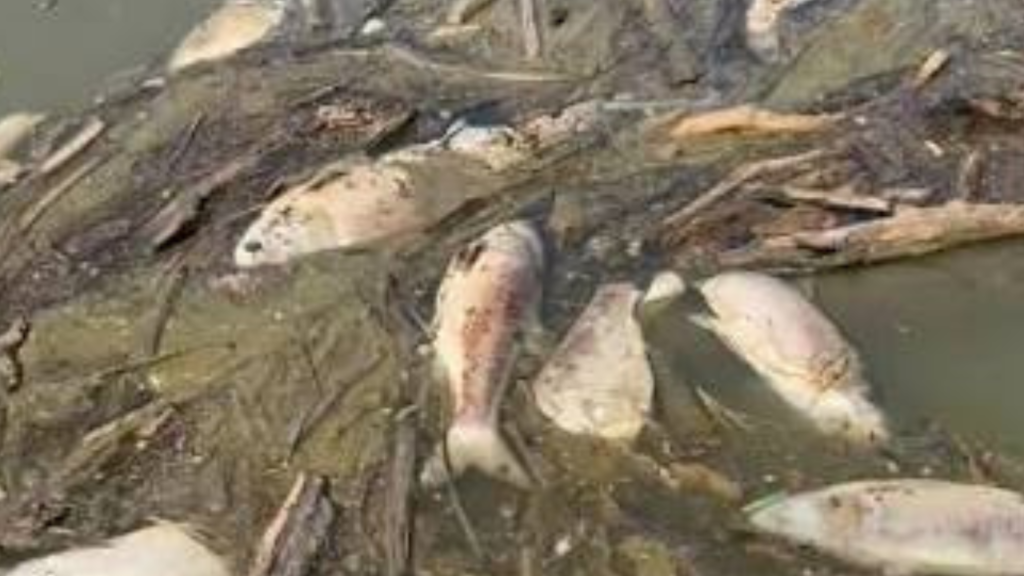
Large Numbers of Dead Fish Reported Along Mississippi River Near Quincy
The unsettling sight has prompted speculation among river users, but similar die-offs involving invasive silver and bighead carp have been documented across the region during periods of summer heat, low oxygen and spawning stress.
QUINCY, Ill. Boaters and residents along the Mississippi River near Quincy are reporting an increasingly noticeable sight in recent days: large numbers of dead fish floating in the river and collecting along portions of the shoreline.
The reports have quickly generated questions about what is happening in the river and whether pollution, sewage, agricultural runoff or some other unusual event could be responsible.
For now, there is reason to be cautious about those conclusions.
Similar fish kills involving invasive carp have occurred elsewhere in Illinois and Missouri this summer, and wildlife officials have attributed those events primarily to natural environmental stresses rather than chemical contamination.
Based on descriptions from river users, many of the fish being observed around the region appear to be invasive carp, particularly silver carp.
A Disturbing Sight, but Not an Unfamiliar Event
Large numbers of dead fish naturally raise alarm.
When dozens or even hundreds of fish appear along the surface of a river, speculation can move quickly, particularly on social media. Recent discussion surrounding the Quincy-area reports has included theories involving agricultural chemicals, sewage discharges and other possible sources of contamination.
At this point, Quincy Current has found no official information connecting the local observations to any such event.
Instead, the reports resemble other invasive carp die-offs documented throughout the Midwest this summer.
In June, the Illinois Department of Natural Resources investigated what it described as an extensive die-off of silver carp in the Peoria Pool of the Illinois River. State fisheries biologists concluded that the event appeared to be naturally occurring and was likely connected to the physiological stress of spawning combined with rapid changes in water chemistry following rainfall.
IDNR said investigators observed no evidence of chemical contamination or pollution and reported that native fish species and other aquatic organisms did not appear to be affected.
Similar conditions were documented along the Mississippi River farther south in August.
The Missouri Department of Conservation reported that dead fish found in portions of the Mississippi near St. Charles, Lincoln and Pike counties were overwhelmingly invasive silver and bighead carp. Officials pointed to warm water, low river levels and reduced dissolved oxygen as major factors affecting the fish.
Those incidents do not, by themselves, establish what is causing the fish currently being reported near Quincy. They do, however, provide important context for what can otherwise appear to be an extraordinary event.
Why Silver Carp Can Die in Large Numbers
Silver carp are an invasive species that have become deeply established throughout portions of the Mississippi River basin.
Their biology can make large-scale mortality events particularly visible.
The fish often congregate in large numbers, and environmental conditions that stress one fish can consequently affect many fish occupying the same area.
Warm water naturally contains less dissolved oxygen than cooler water. When river levels drop, shallow backwaters and slow-moving areas can become especially warm and oxygen-poor. Fish concentrated in those areas can experience significant physiological stress.
Spawning adds another burden.
IDNR fisheries officials noted during the Illinois River die-off that spawning requires considerable energy and that environmental changes can trigger large numbers of invasive carp to spawn at approximately the same time.
That combination can produce a dramatic mortality event without necessarily indicating that something toxic has entered the water.
Late Summer Can Be Particularly Hard on Fish
Exactly where a die-off becomes most noticeable can vary from year to year depending upon water temperature, air temperature, river levels, current and oxygen conditions.
One year, dead fish may accumulate heavily along one stretch of river while another section sees relatively little.
When significant numbers die, currents can also transport carcasses considerable distances downstream. That can make the location where dead fish are ultimately noticed different from the area where the mortality actually occurred.
The Smell May Be the Next Thing Residents Notice
A large fish kill carries another unpleasant consequence.
Decomposition.
When substantial numbers of fish collect along shorelines or in backwaters, the amount of organic material breaking down can produce strong odors.
IDNR specifically warned during its June silver carp die-off that residents and people recreating along the river could encounter unpleasant smells as fish decomposed. The agency noted that such odors following a mortality event do not, by themselves, indicate an ongoing water-quality problem.
Birds, mammals and other scavengers may also take advantage of the sudden food source as carcasses move through the river system.
For people boating, fishing or living close to the Mississippi, however, the short-term result can be decidedly less pleasant, particularly when wind and current concentrate dead fish in one location.
A Reminder of the Scale of the Invasive Carp Problem
Silver carp are perhaps best known to Mississippi River boaters for their tendency to leap from the water when startled by boat motors.
Silver and bighead carp are filter feeders that consume plankton and other resources that also support native fish and the larger river ecosystem. Their ability to reproduce in enormous numbers has made controlling their expansion one of the most significant fisheries-management challenges in the Mississippi River basin.
Large natural die-offs may temporarily remove substantial numbers of fish from a particular stretch of river, but wildlife managers continue to rely on targeted removal, monitoring and other control measures because natural mortality alone has not eliminated established populations.
What River Users Should Watch For
For now, the dead fish appearing near Quincy are worth observing without immediately assuming an environmental disaster has occurred.
Recent documented events elsewhere on the Mississippi and Illinois rivers demonstrate that large die-offs of invasive carp can occur naturally during stressful summer conditions.
At the same time, not every fish kill should automatically be dismissed as natural.
If residents observe large numbers of multiple fish species dying in the same location, unusual discoloration or odors in the water, an apparent discharge, an oil-like sheen or another indication of possible contamination, those circumstances deserve additional investigation.
IDNR encourages the public to report significant fish mortality events involving numerous fish of the same species in Illinois waters so fisheries personnel can evaluate the circumstances.
Quincy Current will continue monitoring the reports along the Mississippi River and will update this story if Illinois or Missouri fisheries officials issue a specific determination regarding the fish currently being observed near Quincy.
For the moment, the unsettling scene appears consistent with something river biologists have seen before: an invasive species, a difficult stretch of summer weather and a river ecosystem doing what river ecosystems sometimes do.